
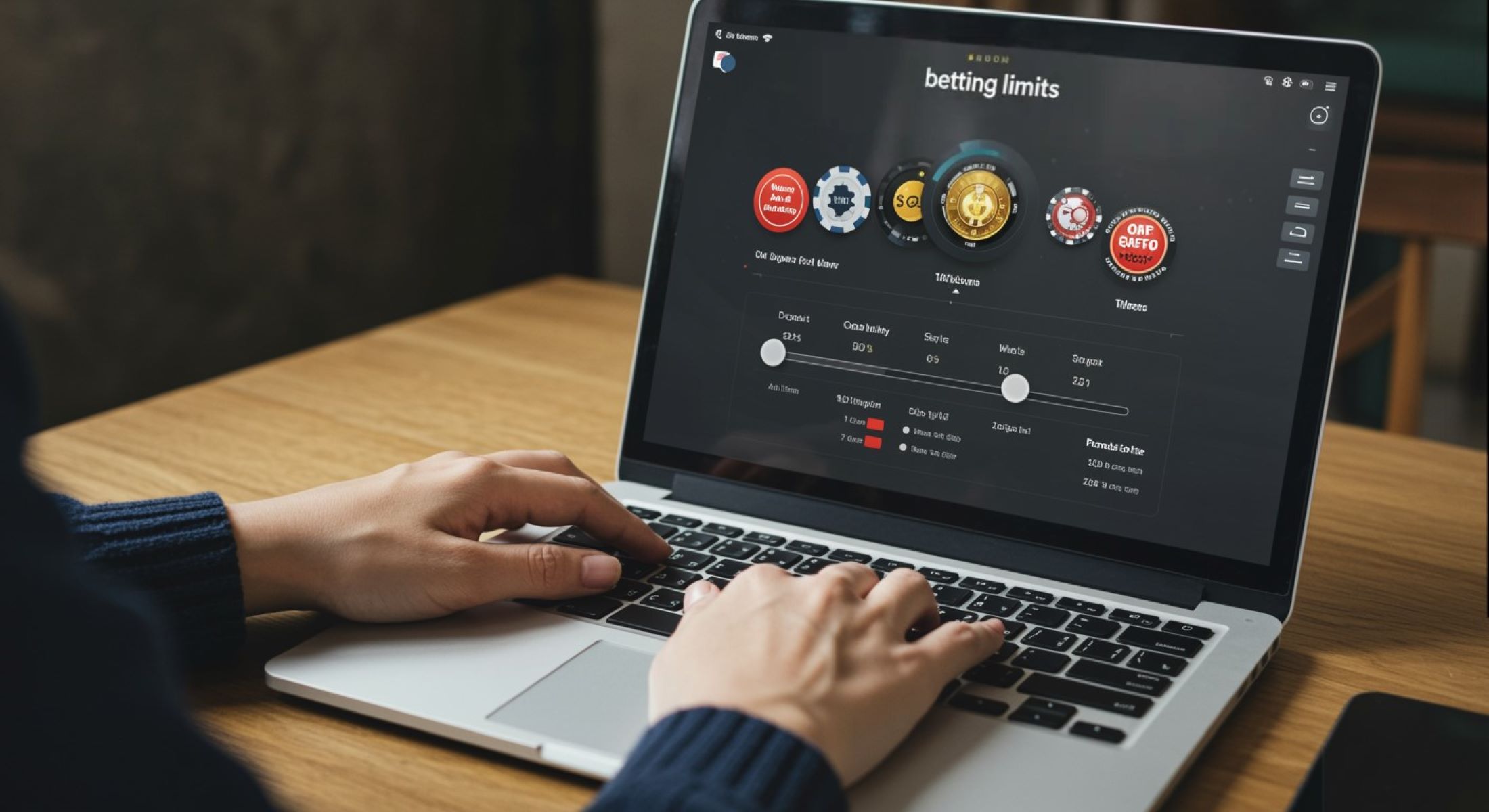
How betting limits protect against high-risk play
Betting limits are legal requirements in South Africa designed to protect consumers from financial harm and gambling-related risks. Under the National Gambling Act and provincial regulations, these limits establish boundaries on how much players can wager, deposit, or lose within specific timeframes, creating essential safeguards against excessive gambling behavior.
As online betting continues to surge in popularity across South Africa, regulatory authorities have intensified their efforts to implement comprehensive limit systems. These measures address the growing concern over high-risk gambling patterns and help maintain the integrity of the country’s regulated gambling environment while protecting vulnerable players from severe financial consequences.
Understanding Betting Limits and Their Legal Foundation in SA
Betting limits encompass various restrictions on gambling activities, including maximum and minimum bet amounts per event, session limits, daily deposit caps, and user-specific restrictions. The National Gambling Act of 2004 provides the primary legal framework for these limits, establishing the authority of provincial gambling boards to regulate and enforce betting restrictions while distinguishing between licensed operators and illegal gambling providers.
These limits exist primarily to prevent problem gambling and protect players from financial ruin. From a regulatory perspective, limits help maintain market stability and ensure that gambling remains a form of entertainment rather than a pathway to financial devastation. The practical risk management approach recognizes that certain gambling behaviors can escalate quickly without proper controls.
Provincial gambling boards work in conjunction with the National Gambling Board to create a comprehensive system of oversight that addresses both recreational and high-risk gambling patterns. This multi-layered approach ensures that betting limits are not only legally mandated but also practically enforceable across different gambling verticals.
The regulatory framework also addresses the technological challenges of modern online betting, requiring operators to implement sophisticated monitoring systems that can track player behavior in real-time and apply limits automatically when thresholds are reached.
Key Provisions in South African Betting Legislation
The National Gambling Act and subsequent amendments establish specific requirements for betting limits, including mandatory deposit restrictions, loss limits, and time-based controls. Licensed operators must implement these limits as a condition of their operating licenses, with regular audits ensuring compliance with both national and provincial regulations.
Recent legislative updates have strengthened enforcement mechanisms and expanded the scope of required limits to include emerging forms of online betting and mobile gambling platforms. These provisions also mandate that operators provide clear information about limits to players and offer tools for self-imposed restrictions.
How Betting Limits Are Set and Enforced
Provincial gambling boards establish minimum standards for betting limits based on local market conditions and risk assessments, while the National Gambling Board provides overarching coordination and policy guidance. Individual operators may implement more restrictive limits than those required by law, particularly for high-risk player segments.
Enforcement involves a combination of automated systems monitoring player activity, regular compliance audits, and penalties for operators who fail to maintain proper limit controls. The collaborative approach between regulators and operators ensures that limits are both effective and practical to implement across diverse gambling platforms.
How Betting Limits Curb High-Risk and Problem Gambling
Different types of betting limits serve specific purposes in protecting players from developing harmful gambling patterns. Each limit type addresses particular risk factors and provides targeted protection against the most common pathways to problem gambling behavior.
The effectiveness of these limits lies in their ability to interrupt the escalation of gambling activity before it reaches dangerous levels. By creating natural pause points and forcing players to consider their gambling behavior, limits provide essential protection against impulsive decision-making that characterizes high-risk gambling.
| Limit Type | Purpose | How It Reduces Risk | Typical SA Example |
|---|---|---|---|
| Daily Deposit Limit | Control money flowing into account | Prevents chasing losses with additional funds | R1,000 maximum daily deposit |
| Single Bet Limit | Prevent catastrophic single losses | Limits potential for large immediate losses | R500 maximum on sports events |
| Loss Limit | Cap total losses over time period | Forces cooling-off period when reached | R2,000 weekly loss maximum |
| Session Time Limit | Prevent extended gambling sessions | Breaks gambling trance and impulsive behavior | 4-hour maximum session duration |
| Reality Check | Remind players of time and money spent | Increases awareness of gambling activity | Pop-up every 60 minutes showing spending |
| Event-Specific Limit | Control exposure to single events | Prevents over-concentration of risk | R200 maximum on live casino games |
Case Examples of Betting Limits in Action
Consider a player who typically deposits R500 daily but experiences a losing streak and attempts to deposit R5,000 to recover losses. With daily deposit limits in place, the system blocks this transaction, preventing the escalation of losses and giving the player time to reconsider their gambling behavior.
Another scenario involves a sports bettor who becomes emotionally invested in a particular match and wants to place increasingly larger bets. Single bet limits prevent this player from wagering their entire account balance on one outcome, protecting them from potential catastrophic losses while still allowing reasonable betting activity.
Time-based limits prove particularly effective for casino game players who may lose track of time during extended gaming sessions. When a player reaches their preset session limit, the system automatically logs them out, forcing a break that often leads to more rational decision-making about continued gambling activity.
Types of Betting Limits in South African Gambling
South African gambling operators must implement various types of betting limits to comply with regulatory requirements and protect their customers. These limits span different aspects of gambling activity and provide comprehensive protection against excessive gambling behavior.
- Minimum and Maximum Bet Limits: Range from R1 minimum bets on slots to R10,000 maximum single bets on major sports events, ensuring accessibility while preventing catastrophic losses
- Daily and Weekly Deposit Caps: Typically set at R2,000 daily and R10,000 weekly for standard accounts, with higher limits available for verified high-roller accounts after enhanced due diligence
- Loss Limits: Mandatory weekly loss limits of R5,000 for new accounts, increasing to R15,000 for established players with demonstrated affordability
- Session Time Limits: Automatic logout after 6 hours of continuous play, with mandatory 30-minute cooling-off periods before re-entry
- Event-Specific Restrictions: Maximum R1,000 bets on live sports events and R500 limits on virtual sports to account for higher volatility and rapid play cycles
- Player-Imposed Customizable Limits: Tools allowing users to set personal limits below regulatory maximums, with 24-hour cooling-off periods before increases take effect
- Age and Location-Based Limits: Enhanced restrictions for players in certain provinces and automatic geo-fencing to prevent underage gambling access
Dynamic vs. Fixed Limits: Adaptation for Player Profiles
Modern betting limit systems increasingly utilize both static regulatory requirements and dynamic, behavior-adaptive controls that respond to individual player risk profiles. Static limits provide consistent baseline protection, while dynamic systems can lower limits automatically when risky patterns are detected.
| Limit Type | How Set | Use Case | Impact on High-Risk Play |
|---|---|---|---|
| Fixed Regulatory Limits | Set by gambling boards | Universal baseline protection | Prevents extreme losses for all players |
| Behavior-Adaptive Limits | AI algorithms analyzing play patterns | Early intervention for at-risk players | Automatically reduces limits when risk detected |
| Income-Based Dynamic Limits | Based on verified affordability checks | Personalized financial protection | Prevents gambling beyond financial means |
Custom Player Controls and Self-Imposed Limits
South African operators must provide comprehensive tools allowing players to customize their own limits and access harm reduction features. These self-imposed controls often prove more effective than regulatory limits because players set them based on their personal financial situations and risk tolerance.
- Set Personal Limits: Players access their account settings to establish deposit, loss, and betting limits below regulatory maximums, with immediate implementation for decreases and 24-hour delays for increases
- Activate Self-Exclusion: Choose from temporary exclusions (24 hours to 6 months) or permanent self-exclusion with minimum 12-month periods before eligibility for account reactivation
- Enable Reality Checks: Configure automatic notifications showing time played, money spent, and current session statistics at customizable intervals from 15 minutes to 2 hours
- Access Support Resources: Connect directly with National Responsible Gambling Programme counselors through integrated platform links and schedule intervention appointments without leaving the gambling site
- Monitor Gambling History: Review comprehensive reports of gambling activity, spending patterns, and limit compliance to maintain awareness of personal gambling behavior and identify concerning trends
Operator and Regulator Strategies for Enforcing Limits
Effective enforcement of betting limits requires sophisticated coordination between gambling operators and regulatory authorities. This collaboration ensures that limits are not only properly implemented but also continuously monitored and updated to address emerging risks and technological developments.
The enforcement framework relies on multiple layers of verification and monitoring systems that track player behavior in real-time. These systems must balance player privacy concerns with the need for effective risk management and regulatory compliance.
Modern enforcement strategies increasingly utilize advanced analytics and artificial intelligence to identify potential limit circumvention attempts and flag unusual gambling patterns that may indicate problem gambling behavior or regulatory violations.
| Strategy | Operator Role | Regulator Role | Compliance Example |
|---|---|---|---|
| KYC Verification | Verify identity and age before account activation | Audit verification processes and impose penalties | ID document verification within 72 hours |
| Geo-fencing Technology | Implement location-based access controls | Set geographic restrictions and monitor compliance | Block access outside licensed provinces |
| Real-time Monitoring | Track player activity against set limits continuously | Require automated reporting of limit breaches | Automatic account suspension when limits exceeded |
| Regular Compliance Audits | Maintain detailed records of limit enforcement | Conduct quarterly reviews and impose corrective measures | Monthly submission of compliance reports |
| Cross-Platform Coordination | Share exclusion lists and limit information | Facilitate industry-wide information sharing | National exclusion database integration |
Challenges and Enforcement Gaps
Despite comprehensive regulatory frameworks, several significant enforcement gaps remain in South Africa’s betting limit system. Cross-operator coordination remains limited, allowing some players to circumvent limits by maintaining accounts with multiple licensed operators simultaneously.
Technical barriers also present challenges, particularly in monitoring mobile gambling activity and preventing access through virtual private networks that mask player locations. The current regulatory framework lacks comprehensive affordability checks, meaning limits may not adequately reflect individual players’ financial circumstances and ability to sustain gambling losses.
Penalties for Exceeding or Circumventing Limits
- Player Account Suspension: Immediate temporary suspension of gambling privileges for limit violations, ranging from 24 hours to permanent exclusion depending on severity and frequency of breaches
- Operator License Penalties: Fines ranging from R100,000 to R5 million for failing to properly implement or enforce betting limits, with potential license suspension for repeat violations
- Criminal Prosecution: Illegal operators face criminal charges and imprisonment up to 10 years, while players using illegal sites face fines up to R10 million and potential criminal records
- Financial Sanctions: Frozen accounts and forfeiture of winnings obtained through limit circumvention, with funds redirected to responsible gambling programs and player compensation schemes
The Role of Responsible Gambling Programs in SA
The National Responsible Gambling Programme (NRGP) serves as the cornerstone of South Africa’s comprehensive approach to gambling harm prevention. This program integrates closely with operator-level betting limits to create a multi-layered protection system that addresses both prevention and intervention aspects of problem gambling.
- National Exclusion Registry: Centralized database allowing players to exclude themselves from all licensed gambling operators simultaneously, with automatic enforcement across all platforms and venues
- Free Counseling Services: 24/7 helpline and face-to-face counseling sessions provided at no cost to affected individuals and their families, with specialized programs for different types of gambling problems
- Public Awareness Campaigns: Educational initiatives promoting responsible gambling practices and highlighting the availability of limit-setting tools and support services across traditional and digital media
- Industry Training Programs: Mandatory staff training for gambling operators covering problem gambling identification, intervention techniques, and proper referral procedures to support services
- Research and Data Collection: Ongoing studies tracking gambling behavior patterns, limit effectiveness, and problem gambling prevalence to inform policy development and regulatory improvements
- Integration with Healthcare Systems: Partnerships with medical professionals and mental health services to provide comprehensive treatment for gambling-related disorders and financial counseling
Voluntary Exclusion and Player Support
The self-exclusion process in South Africa provides multiple pathways for players seeking to limit or eliminate their gambling activity. This system integrates directly with operator betting limits to ensure comprehensive protection for vulnerable individuals.
- Initiate Exclusion Request: Players can self-exclude through operator websites, the NRGP helpline, or by visiting licensed gambling venues in person, with immediate temporary exclusion taking effect while formal processing occurs
- Complete Verification Process: Identity verification and exclusion period selection (minimum 6 months to lifetime), with mandatory cooling-off period before any exclusion can be reduced or lifted
- Access Ongoing Support: Automatic enrollment in counseling programs and regular check-ins with responsible gambling counselors throughout the exclusion period, including family support services when requested
- Managed Re-entry Process: For temporary exclusions, structured re-admission process including counseling assessment, mandatory limit-setting, and enhanced monitoring period before full account restoration
Industry Funding for Prevention and Awareness
South African gambling operators contribute mandatory levies to fund responsible gambling initiatives, with contributions calculated as a percentage of gross gambling revenue. These funds support the NRGP, research programs, and community education initiatives that complement the technical limit systems implemented by individual operators.
The industry funding model ensures sustainable financing for responsible gambling programs while creating incentives for operators to implement effective limit systems that reduce overall problem gambling rates and associated social costs.
Future Trends: Evolving Limits, Technology, and Policy Debates
The landscape of betting limits in South Africa continues to evolve rapidly, driven by technological advances, changing player behavior patterns, and ongoing policy debates about the most effective approaches to gambling harm prevention. These developments promise to reshape how limits are implemented and enforced in the coming years.
| Trend | Driver | Potential Impact | Relevance to SA |
|---|---|---|---|
| AI-Based Risk Scoring | Machine learning advances | Predictive intervention before problems develop | Could enhance current basic monitoring systems |
| Individualized Dynamic Limits | Personalization technology | Limits that adapt to individual risk profiles | Requires regulatory framework updates |
| Mandatory Affordability Checks | Consumer protection focus | Limits based on verified income and expenses | Under consideration by provincial boards |
| Cross-Border Enforcement | Digital gambling growth | Better control of offshore operator access | Critical for maintaining regulatory integrity |
| Blockchain-Based Limit Tracking | Transparency demands | Immutable records of limit compliance | Could improve audit efficiency and accuracy |
| Real-Time Financial Monitoring | Open banking integration | Automatic adjustment based on financial changes | Faces privacy and implementation challenges |
Affordability Checks and Cross-Operator Limits: A Policy Debate
South Africa currently lacks comprehensive affordability check requirements, unlike some international jurisdictions that mandate income verification before allowing gambling activity above certain thresholds. This gap has sparked intense debate between consumer advocates pushing for enhanced financial protection and operators concerned about privacy implications and implementation costs.
The discussion around cross-operator limits centers on creating unified systems that would prevent players from circumventing limits by maintaining accounts with multiple licensed operators. While technically feasible, such systems raise questions about data sharing, competitive fairness, and the balance between consumer protection and market dynamics in South Africa’s evolving gambling landscape.