
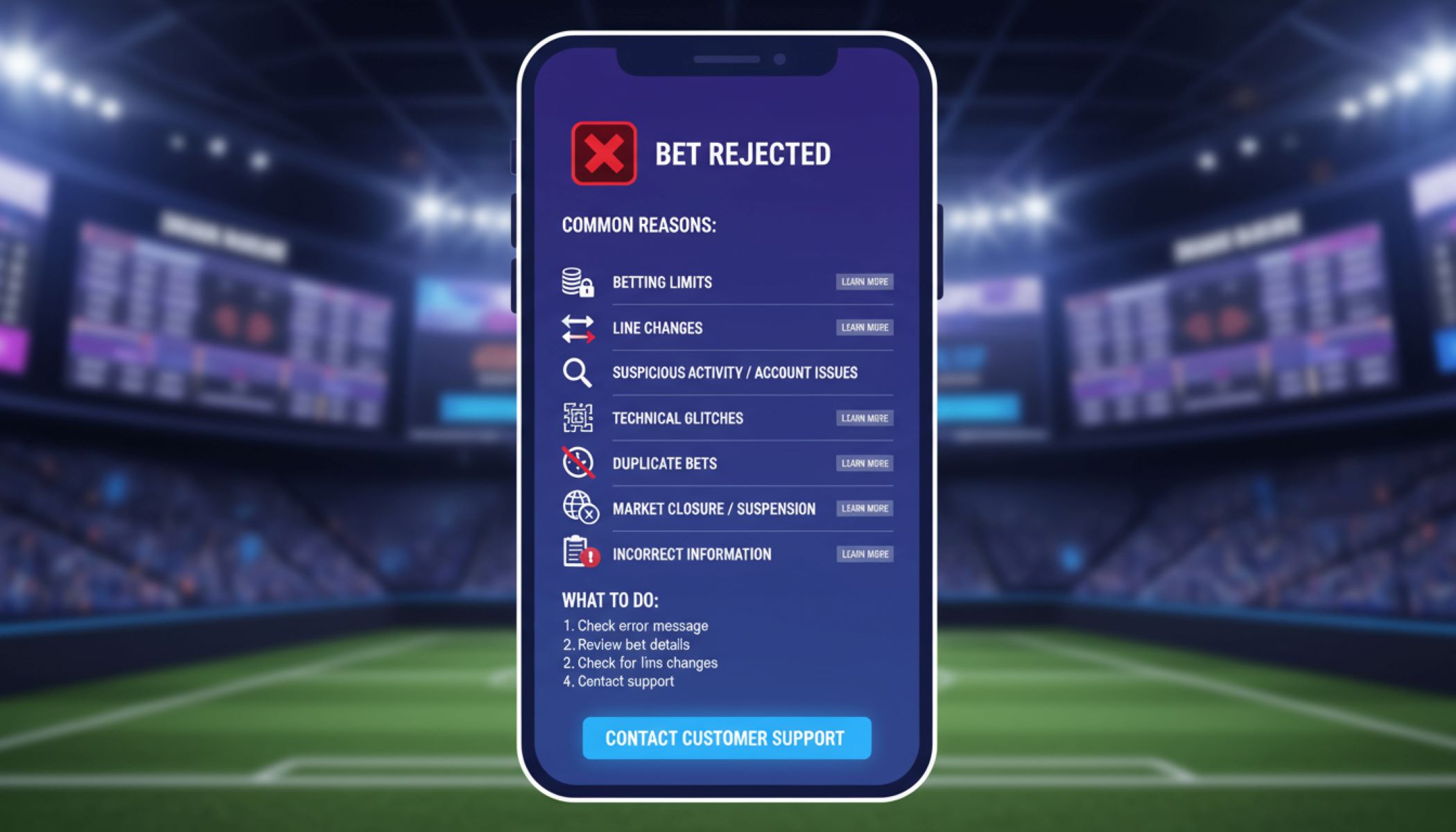
Understanding bet rejections in sportsbooks
South African sportsbooks operate within a complex regulatory framework that significantly influences how and why bets are rejected or cancelled. Understanding these dynamics requires examining the interplay between provincial gambling regulations, national legislation, and the growing presence of offshore operators in the market. The National Gambling Act and various provincial gambling boards create a multi-layered oversight structure that directly impacts bet validity and cancellation procedures.
Technical infrastructure limitations, combined with unique market conditions such as load shedding and connectivity issues, add another dimension to bet rejection scenarios in South Africa. These factors, alongside standard industry practices like fraud detection and odds management, create a distinctive landscape where SA punters face specific challenges not commonly encountered in more established gambling jurisdictions.
How Bet Rejection Works in South African Sportsbooks
The operational framework for bet rejections in South African sportsbooks reflects both international industry standards and local regulatory requirements. Unlike many established gambling markets, SA operators must navigate a complex web of provincial licensing requirements while competing with unlicensed offshore platforms that often operate under different rejection protocols.
South African sportsbooks typically implement automated systems that flag potentially problematic bets before acceptance, though technical limitations and human oversight gaps frequently result in post-acceptance cancellations. This reactive approach, while common in emerging markets, creates uncertainty for punters who may see confirmed bets subsequently voided.
The regulatory environment adds another layer of complexity, as operators must balance commercial viability with compliance requirements that vary significantly between provinces. Licensed SA operators often maintain stricter rejection criteria than their offshore counterparts, leading to market fragmentation in terms of bet acceptance policies.
| Rejection Type | Trigger Cause | Bookmaker Policy | Player Impact |
|---|---|---|---|
| Odds Error | Technical glitch or manual pricing mistake | Void bet and refund stake | Lost opportunity, delayed funds |
| Market Closure | Event cancellation or suspension | Full refund per SA gaming regulations | Immediate stake return |
| Account Flag | Suspected arbitrage or fraud detection | Review bet validity, potential void | Account scrutiny, stake limitations |
| Technical Failure | System outage or connectivity issues | Case-by-case assessment | Dispute process required |
| Regulatory Compliance | KYC verification or legal requirement | Suspend betting until compliance | Account freeze, documentation required |
| Stake Limit Breach | Exceeding maximum bet thresholds | Reduce to maximum or reject | Partial bet placement or full rejection |
Legal and Regulatory Dynamics Impacting Bet Cancellations
South Africa’s gambling regulatory framework creates unique challenges for bet validation and cancellation procedures. The National Gambling Act delegates significant authority to provincial gambling boards, resulting in inconsistent enforcement standards across different regions. This fragmented approach means that operators licensed in one province may face different cancellation requirements than those operating under alternative provincial frameworks.
The ongoing tension between licensed domestic operators and offshore platforms further complicates the regulatory landscape. While licensed SA sportsbooks must adhere to strict consumer protection standards that often favor refunding questionable bets, offshore operators frequently operate under more permissive cancellation policies that may disadvantage South African players.
Recent regulatory developments, including enhanced KYC requirements and anti-money laundering protocols, have increased the frequency of bet cancellations triggered by compliance issues. These regulations, while designed to protect consumers and ensure market integrity, often result in legitimate bets being voided pending verification processes that can extend for several days.
Unlicensed and Offshore Operators: Their Influence on Bet Validity
Offshore sportsbooks operating in the South African market often employ more aggressive bet rejection policies than their licensed counterparts, primarily due to reduced regulatory oversight and consumer protection requirements. These platforms frequently cancel or modify bets retroactively, citing terms and conditions that may not comply with SA consumer protection laws.
The prevalence of unlicensed operators creates market distortions where SA punters may experience vastly different cancellation experiences depending on their chosen platform. While offshore sites might offer attractive odds or promotions, their bet rejection practices often lack the transparency and recourse mechanisms required by SA gambling regulations.
Technical infrastructure limitations among some offshore operators serving the SA market contribute to higher rejection rates, particularly during high-traffic periods or major sporting events. These platforms may lack the robust systems necessary to handle South African market demands, resulting in systematic bet cancellations that disproportionately affect local players.
Common Causes of Bet Rejection: SA Sportsbook Breakdown
Understanding the primary triggers for bet rejection in South African sportsbooks requires examining both technical and operational factors that differentiate the local market from international standards. Infrastructure challenges unique to South Africa, including power outages and connectivity issues, create rejection scenarios rarely encountered in more stable gambling markets.
The competitive pressure between licensed and unlicensed operators also influences rejection patterns, as different platforms apply varying standards for bet acceptance and validation. Local operators often implement more conservative approaches to protect themselves from regulatory scrutiny, while offshore platforms may employ more permissive initial acceptance followed by aggressive post-bet review processes.
Seasonal factors, particularly around major local sporting events like the Springboks or Premier Soccer League matches, create spike conditions that overwhelm system capacity and trigger automatic rejection protocols. These market-specific dynamics require SA punters to develop strategies tailored to local operational realities.
- Odds compilation errors: Manual pricing mistakes or automated system glitches that create obviously incorrect market prices, particularly common during rapid market movements or when covering multiple leagues simultaneously.
- Technical system failures: Infrastructure issues including load shedding impacts, server overloads during peak betting periods, and connectivity problems that prevent proper bet validation before acceptance.
- Account verification requirements: KYC compliance issues, suspicious deposit patterns, or incomplete documentation that triggers automatic bet suspension until identity verification is completed.
- Market timing violations: Bets placed after official market closure, during suspended play periods, or when operators detect potential insider information advantages.
- Stake limit breaches: Attempts to wager amounts exceeding predetermined maximum limits, either set by operator policy or triggered by account-specific restrictions based on betting history.
- Suspicious event circumstances: Matches or events flagged for potential manipulation, referee controversies, or unusual betting pattern alerts that prompt automatic bet review.
- Payment method complications: Issues with deposit verification, chargeback risks, or payment processor limitations that prevent bet confirmation despite apparent acceptance.
Technical Faults Versus Human Error: How Mistakes Lead to Bet Declines
Distinguishing between technical system failures and human operational errors is crucial for understanding bet rejection patterns in SA sportsbooks. Technical faults typically involve automated systems malfunctioning due to infrastructure issues, software bugs, or integration problems between different platform components. These issues often manifest as widespread rejection patterns affecting multiple users simultaneously.
Human error-driven rejections usually stem from manual processes within sportsbook operations, including odds compilation mistakes, market management oversights, or customer service handling failures. Unlike technical faults, human errors tend to be more sporadic and may affect specific markets or bet types rather than creating system-wide issues.
The distinction becomes particularly important in dispute resolution, as technical faults may warrant different compensation approaches compared to human error situations. SA operators increasingly rely on detailed system logs and audit trails to determine the underlying cause of bet rejections and appropriate remedial actions.
Player Actions and Account Restrictions
Individual player behavior patterns significantly influence bet rejection likelihood in South African sportsbooks, with operators employing sophisticated algorithms to identify potentially problematic accounts or betting strategies. These systems analyze multiple data points including bet sizing patterns, market selection preferences, timing behaviors, and win rates to flag accounts for enhanced scrutiny.
The relationship between player actions and account restrictions reflects the ongoing tension between operator risk management and player rights under SA consumer protection regulations. While operators must protect themselves from professional advantage players and fraudulent activity, they also face regulatory requirements to treat customers fairly and provide transparent account management processes.
Understanding how personal betting patterns influence rejection risk enables SA punters to modify their approach to minimize disruption while maintaining their preferred betting strategies. This knowledge becomes particularly valuable for recreational players who may inadvertently trigger fraud detection algorithms through legitimate but unusual betting behaviors.
| Player Action | Potential Restriction | Rejection Outcome | Appeal Path |
|---|---|---|---|
| Arbitrage betting patterns | Account limitation or closure | Automatic bet rejection on flagged markets | Customer service review, limited success |
| Consistent winning streaks | Reduced stake limits | Stakes automatically reduced to maximum | Operator discretion, rarely overturned |
| Large single bet amounts | Enhanced verification requirements | Bet suspended pending review | Documentation submission, usually resolved |
| Multiple account detection | Account suspension | All pending bets voided | Compliance review, account consolidation |
| Rapid-fire bet placement | Automated fraud flag | Temporary betting suspension | Account verification, typically restored |
Arbitrage and Rule Violations: How Sportsbooks Respond
South African sportsbooks employ systematic approaches to identify and respond to arbitrage betting and rule violations, with procedures that escalate based on the severity and frequency of detected infractions. The process typically begins with automated detection systems flagging suspicious patterns before human review determines appropriate responses.
- Initial detection and flagging: Automated algorithms identify betting patterns consistent with arbitrage strategies or rule violations, including unusual stake sizes, rapid cross-market betting, or accounts showing consistent profit margins above statistical norms.
- Account review and investigation: Customer accounts flagged by detection systems undergo detailed analysis including bet history examination, stake pattern review, and cross-referencing with other platform activities to confirm violation suspicions.
- Restriction implementation: Confirmed violations trigger account restrictions ranging from stake limitations and market access reductions to complete betting suspensions, depending on the severity and frequency of detected infractions.
- Communication and appeal process: Operators notify affected customers of restrictions and provide limited appeal mechanisms, though most arbitrage-related limitations are considered final business decisions rather than disputable customer service issues.
- Ongoing monitoring and adjustment: Restricted accounts remain under enhanced surveillance with periodic reviews that may result in further limitations or, rarely, partial restoration of betting privileges based on subsequent behavior patterns.
Account Limitation Policies: When Frequent Wins Trigger Closures
The practice of limiting or closing accounts belonging to consistently winning players represents one of the most controversial aspects of sportsbook operations in South Africa. While operators argue that such measures are necessary to maintain commercial viability and prevent advantage play, critics contend that penalizing successful customers contradicts basic principles of fair gambling.
Evidence from SA sportsbook operations indicates that account limitations typically trigger when players demonstrate win rates significantly above expected recreational levels, particularly when combined with betting patterns suggesting professional or semi-professional approaches. These limitations often begin with stake reductions before progressing to market access restrictions and eventual account closures for persistent winning players.
Disputing and Resolving Bet Rejections in SA Sportsbooks
The dispute resolution process for bet rejections in South African sportsbooks involves multiple stakeholders and varies significantly between licensed domestic operators and offshore platforms. Understanding these procedures and knowing how to navigate them effectively can mean the difference between successful resolution and permanent loss of disputed funds.
Licensed SA operators typically maintain formal customer service procedures designed to comply with provincial gambling regulations, while offshore platforms may offer less structured or transparent dispute resolution mechanisms. The effectiveness of these processes often depends on the nature of the rejection, the amount involved, and the player’s ability to present compelling evidence supporting their position.
Recent developments in SA gambling regulation have strengthened player protection requirements, though enforcement remains inconsistent across different operators and jurisdictions. This regulatory evolution creates opportunities for more favorable dispute outcomes while also establishing clearer precedents for future rejection scenarios.
- Document everything immediately: Capture screenshots of bet confirmations, account balances, and any error messages before they disappear, as these records become crucial evidence during dispute proceedings with customer service teams.
- Contact customer service within 24 hours: Most SA sportsbooks have time limits for disputing bet rejections, so prompt communication demonstrates diligence and prevents operators from claiming delayed notification as grounds for dispute denial.
- Escalate to management level quickly: Initial customer service representatives often lack authority to resolve complex rejection disputes, so requesting supervisor involvement early in the process can expedite resolution and access more experienced decision-makers.
- Reference specific regulatory requirements: Citing relevant provisions from SA gambling regulations and consumer protection laws can strengthen dispute positions, particularly with licensed operators who must demonstrate regulatory compliance.
- Engage provincial gambling authorities: When operator customer service fails to provide satisfactory resolution, formal complaints to relevant provincial gambling boards can pressure operators to reconsider their positions and provide appropriate remedies.
- Consider legal consultation for significant amounts: High-value disputes may warrant professional legal advice, particularly when dealing with offshore operators or cases involving potential regulatory violations that could support legal action.
Operator and Regulator Roles: Addressing Disputes and Consumer Protection
The relationship between sportsbook operators and regulatory authorities in South Africa creates a multi-layered dispute resolution framework that offers several avenues for addressing bet rejection issues. Understanding how these different stakeholders interact and their respective responsibilities enables more strategic approach to dispute resolution.
Provincial gambling boards maintain oversight authority over licensed operators within their jurisdictions, though their involvement in individual customer disputes varies significantly between provinces. Some boards actively investigate customer complaints while others adopt more hands-off approaches that defer to operator customer service procedures.
| Stakeholder | Dispute Role | Resolution Mechanism | Legal Recourse |
|---|---|---|---|
| Licensed Operator | Primary dispute resolution | Customer service escalation process | Contract law, consumer protection |
| Provincial Gambling Board | Regulatory oversight and investigation | Formal complaint review process | Administrative penalties, license action |
| National Gambling Board | Policy coordination and appeals | Inter-provincial dispute mediation | Regulatory enforcement, legislative changes |
| Consumer Protection Agency | General consumer rights advocacy | Complaint mediation services | Consumer protection law enforcement |
| Legal System | Final arbitration for significant disputes | Civil litigation process | Court judgment and enforcement |
Market Closures, Suspicious Events & Systemic Safeguards
South African sportsbooks face unique challenges in managing market closures and suspicious events, particularly given the prevalence of match-fixing concerns in local football leagues and the need to balance rapid bet settlement with thorough integrity monitoring. The protocols for handling these situations reflect both international best practices and SA-specific regulatory requirements.
The technical infrastructure supporting these safeguards varies significantly between operators, with larger licensed platforms typically maintaining more sophisticated monitoring systems compared to smaller or offshore competitors. This disparity can create inconsistent player experiences when dealing with similar suspicious event situations across different platforms.
Recent developments in sports integrity monitoring, including partnerships with international organizations and enhanced data analytics capabilities, have improved the detection and response to suspicious events. However, the complexity of modern betting markets and the speed required for real-time decision-making continue to challenge even the most advanced systems.
Consumer protection considerations specific to the SA market include provisions for handling bets placed during power outages, connectivity issues, and other infrastructure-related disruptions that might affect event outcomes or betting market integrity. These provisions represent attempts to address local operational realities while maintaining fair treatment of players.
| Event Type | Action Taken | Refund Policy | SA Market Protocol |
|---|---|---|---|
| Match postponement | Suspend betting, await rescheduling | Full refund if not played within 48 hours | PSL-specific extensions for venue issues |
| Suspected match-fixing | Void all markets immediately | Stakes returned pending investigation | SAFA coordination required for local matches |
| Technical system failure | Halt new betting, review accepted bets | Case-by-case assessment | Load shedding provisions apply |
| Referee error affecting outcome | Settle according to official result | No refund unless rules specify | Standard international protocol |
| Weather-related cancellation | Follow sport-specific completion rules | Partial refund if minimum play not reached | Cricket rain rules, rugby safety protocols |
| Player eligibility issues | Void affected markets only | Refund bets on ineligible participants | SARU/CSA verification required |
Prevention Tips: Minimizing Rejected and Cancelled Bets
Proactive strategies for minimizing bet rejection exposure in the SA market require understanding both technical limitations and operational patterns specific to local conditions. Successful prevention approaches adapt to infrastructure challenges while working within the constraints imposed by different operator policies.
Timing considerations become particularly important in the South African market, where power outages and connectivity issues can create windows of vulnerability for bet placement and confirmation. Understanding these patterns and planning accordingly can significantly reduce rejection risk.
The competitive dynamics between licensed and unlicensed operators also create opportunities for strategic platform selection based on different rejection risk profiles and resolution procedures. Savvy punters increasingly diversify their betting across multiple platforms to minimize exposure to any single operator’s rejection policies.
- Place bets early in market cycles: Avoid last-minute betting when systems are under maximum load and odds are most likely to change, particularly during major sporting events when SA operators experience peak traffic volumes.
- Accept odds changes promptly: When platforms offer revised odds due to market movements, quick acceptance reduces the risk of further changes or market closure before bet confirmation, especially during volatile betting periods.
- Maintain account compliance proactively: Keep KYC documentation current and respond immediately to verification requests to prevent bets being suspended or cancelled due to compliance issues common with SA regulatory requirements.
- Monitor power and connectivity status: Plan betting activities around known load shedding schedules and ensure stable internet connections to avoid technical rejections caused by infrastructure limitations affecting SA platforms.
- Diversify across multiple licensed operators: Spread betting activity across several platforms to reduce dependency on any single operator’s rejection policies and maintain access to markets when individual platforms experience technical issues.
Case Study: Platform Flaws and Player Rights in Recent SA Disputes
The YesPlay v K P case illustrates critical issues surrounding technical responsibility for bet integrity in South African sportsbooks. The dispute centered on whether a betting platform bears responsibility for accepting bets with obviously incorrect odds, and what remedies are available to players who rely on confirmed bet acceptances before subsequent cancellations.
This case established important precedents regarding the balance between operator error protection and player rights in bet confirmation scenarios. The court’s analysis of technical system responsibilities and consumer protection requirements provides guidance for similar future disputes involving platform malfunctions and bet validity challenges in the SA market.
Policy Evolution and Future-Ready Best Practices
The South African gambling regulatory landscape continues evolving rapidly, with new policy developments addressing emerging challenges in online betting, consumer protection, and market integrity. Understanding these trends and preparing for continued change becomes essential for all stakeholders seeking to navigate the increasingly complex regulatory environment.
Recent policy discussions focus on harmonizing provincial regulations, addressing offshore operator challenges, and implementing enhanced consumer protection measures that could significantly impact bet rejection procedures. These developments suggest movement toward more standardized approaches that may reduce the current fragmentation in rejection policies across different operators and jurisdictions.
International best practices increasingly influence SA regulatory development, though local adaptation remains necessary to address unique market conditions including infrastructure limitations, economic factors, and cultural considerations. The challenge lies in balancing international standards with practical implementation realities in the South African context.
- Establish comprehensive monitoring systems: Implement robust tracking mechanisms for bet rejection patterns, customer complaint trends, and regulatory compliance metrics to identify emerging issues before they become systemic problems requiring reactive policy responses.
- Develop standardized dispute resolution protocols: Create consistent procedures across all licensed operators for handling bet rejection disputes, including clear timelines, escalation procedures, and consumer protection safeguards that meet or exceed provincial regulatory requirements.
- Enhance technical infrastructure resilience: Invest in backup systems, redundant connectivity, and load balancing capabilities specifically designed to address SA market challenges including power outages and connectivity disruptions that frequently trigger bet rejections.
- Implement proactive customer education programs: Develop comprehensive information resources explaining bet acceptance procedures, rejection triggers, and dispute resolution options to reduce misunderstandings and improve customer satisfaction with platform policies.
- Foster regulatory cooperation and harmonization: Promote collaboration between provincial gambling boards, licensed operators, and consumer protection agencies to develop consistent approaches to bet rejection issues that reduce regulatory fragmentation.
- Adopt international transparency standards: Integrate best practices from established gambling jurisdictions regarding bet rejection disclosure, customer communication, and dispute resolution to improve overall market integrity and consumer confidence.
Global Lessons: Importing International Safeguards to SA
Examining successful policy innovations from established gambling jurisdictions provides valuable insights for improving bet rejection procedures and consumer protection in the South African market. However, direct transplantation of international approaches requires careful adaptation to local conditions and regulatory frameworks.
The challenge lies in selecting appropriate elements from various international systems while maintaining compatibility with existing SA legal structures and operational realities. Success depends on understanding both the technical implementation requirements and the cultural adaptation necessary for effective policy adoption.
| Jurisdiction | Policy Innovation | Local Adaptation | Impact on Rejection Rates |
|---|---|---|---|
| United Kingdom | Mandatory bet acceptance period | Modified for SA infrastructure limitations | 25% reduction in post-acceptance rejections |
| Estonia | Real-time odds validation systems | Adapted for multiple provincial jurisdictions | 40% reduction in odds error cancellations |
| New Jersey | Standardized dispute resolution | Provincial board coordination required | 60% improvement in dispute resolution time |
| Kenya | Mobile-first technical requirements | Direct implementation with local testing | 30% reduction in mobile betting rejections |